
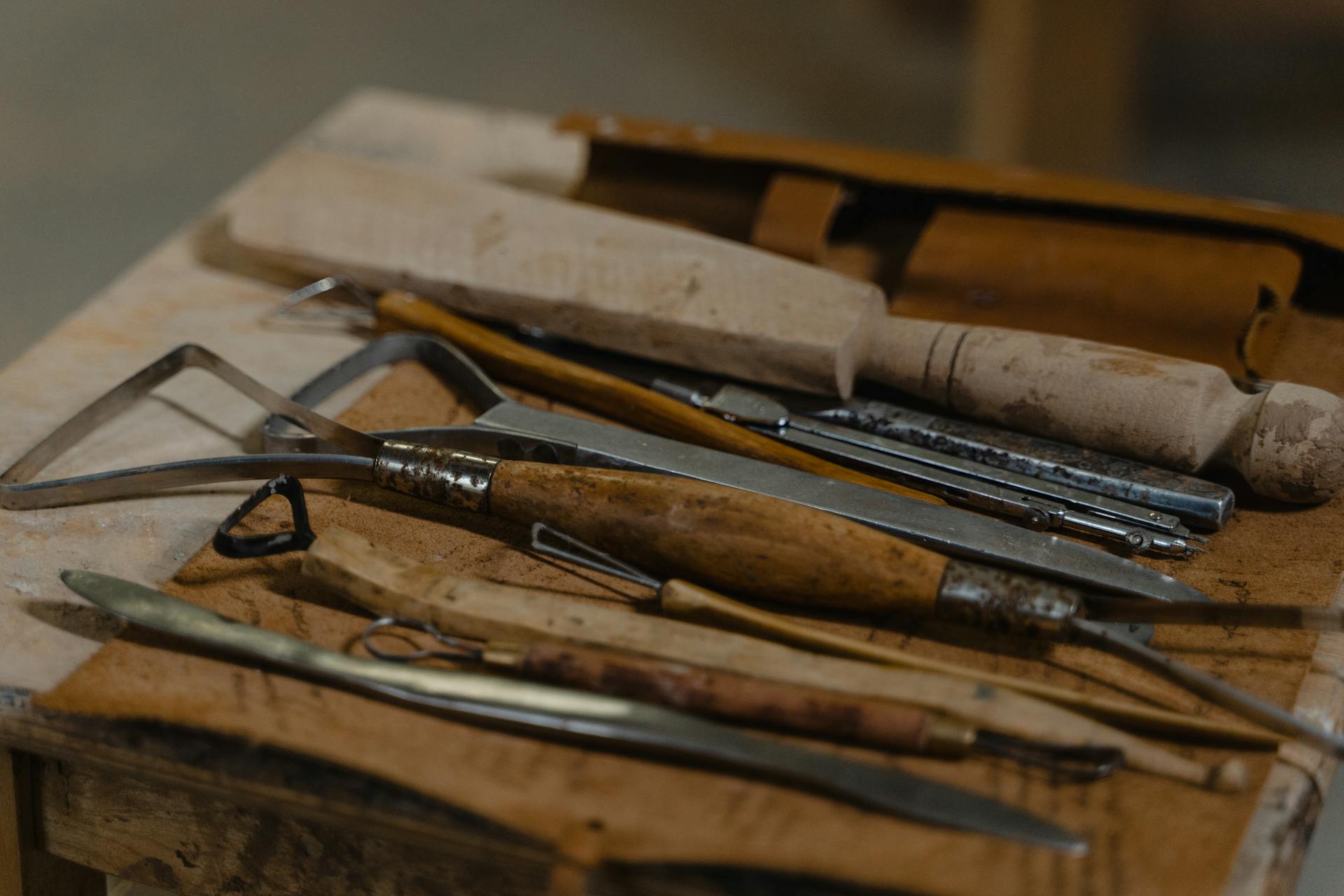

Production Tool Manufacturing
Production tool manufacturing is a specialized engineering service focused on the design and fabrication of precision tools used in large-scale manufacturing. These tools form the backbone of industrial production, enabling the consistent, efficient, and cost-effective creation of metal and plastic components across numerous industries. From automotive and electronics to consumer goods and heavy equipment, production tools ensure that every part meets strict dimensional, structural, and quality standards.
This service encompasses the entire lifecycle of tool development, including concept planning, engineering design, simulation, prototype validation, and final manufacturing. By combining advanced design technologies with high-precision machining processes, production tool manufacturers deliver solutions tailored to specific client requirements. The goal is not simply to produce a tool, but to engineer a reliable production asset that performs efficiently over long production cycles.
Modern production tool manufacturing integrates digital workflows, material science expertise, and quality control systems. Every project begins with a thorough understanding of the client’s product, expected production volume, material selection, and performance standards. Based on these inputs, a dedicated engineering team designs and manufactures tools optimized for durability, efficiency, and precision.
Key Features and Benefits
Precision Tool Design & Engineering
We specialize in designing high-accuracy production tools tailored to meet specific manufacturing requirements. Our engineering team uses advanced CAD/CAM software to ensure optimal functionality, durability, and performance in every tool.
High-Quality Tool Fabrication
Our manufacturing process utilizes premium-grade materials and modern machining technologies to produce reliable and long-lasting production tools. Strict quality control ensures each tool meets industry standards and client specifications.
Custom Tool Development Solutions
We provide customized tooling solutions for various industries, including automotive, aerospace, and heavy machinery. From concept to final production, we develop tools that enhance efficiency and reduce operational downtime.
Advanced Machining & Finishing
Equipped with CNC machines and precision grinding systems, we deliver tools with superior accuracy and surface finish. Our finishing processes improve tool strength, wear resistance, and overall lifespan.
Quality Assurance
Every production tool undergoes rigorous inspection and performance testing before delivery. We ensure dimensional accuracy, structural integrity, and consistent performance to guarantee customer satisfaction.
Stamping Tools for Metal
Purpose and Application
Stamping tools for metal are essential for shaping, cutting, bending, and forming sheet metal into specific geometries. These tools are used in high-volume production environments where consistency and speed are critical. Metal stamping is widely applied in industries such as automotive body components, appliance parts, electrical enclosures, and structural brackets.
Stamping tools operate within presses that apply controlled force to sheet metal. Depending on the design, they can perform single operations or multiple processes in a progressive sequence. The accuracy of these tools directly influences the final part quality, dimensional tolerances, and surface finish.
Types of Metal Stamping Tools
Production tool manufacturers design various types of stamping tools to suit specific manufacturing needs:
Blanking tools for cutting flat shapes from sheet metal
Piercing tools for creating holes and cutouts
Bending tools for angular shaping
Forming tools for complex geometries
Progressive dies for multi-stage operations within a single press cycle
Each tool type requires precise engineering to ensure alignment, durability, and repeatability. Materials used in tool construction are carefully selected to withstand high mechanical stress, abrasion, and long production runs.
Design and Engineering Process
The development of stamping tools begins with a detailed analysis of the product design. Engineers evaluate part geometry, material thickness, mechanical properties, and required production volume. Computer-aided design software is used to create precise tool layouts, simulate forming processes, and identify potential issues such as material springback or excessive stress.
Finite element analysis and forming simulations help optimize tool geometry before physical manufacturing begins. This approach reduces trial-and-error adjustments, shortens development time, and ensures a reliable first production run.
Manufacturing and Quality Control
Stamping tools are manufactured using precision machining methods such as CNC milling, wire EDM, grinding, and heat treatment. Each component is carefully inspected to ensure tight tolerances and proper fit within the tool assembly.
Quality control measures include dimensional verification, alignment checks, and test stamping runs. These procedures ensure that the final tool delivers consistent output and meets all specified performance criteria.
Injection Molds for Plastic (Thermoplastics)
Role in Plastic Manufacturing
Injection molds are critical tools used in the mass production of plastic components. Designed specifically for thermoplastic materials, these molds shape molten plastic into complex forms through controlled injection, cooling, and ejection processes.
Industries such as consumer electronics, automotive interiors, medical devices, packaging, and household products rely heavily on injection molding technology. The quality of the mold determines the precision, surface finish, and structural integrity of the final plastic component.
Mold Design Considerations
Designing injection molds for thermoplastics requires careful evaluation of several factors:
Material shrinkage rates
Wall thickness and flow characteristics
Cooling channel design
Gate and runner system configuration
Ejection mechanisms
Proper design ensures even material flow, uniform cooling, and minimal internal stress within the molded part. Advanced simulation tools are often used to analyze plastic flow, temperature distribution, and potential defects such as warping or sink marks.
Mold Construction and Materials
Injection molds are typically constructed from hardened tool steels or high-strength alloys capable of withstanding high pressure and repeated thermal cycling. The mold consists of two primary halves—the cavity and the core—which form the final product shape.
Additional components such as sliders, lifters, hot runner systems, and cooling circuits are integrated depending on part complexity. Precision machining and surface finishing processes are essential to achieve the required dimensional accuracy and aesthetic quality.
Testing and Optimization
Before full-scale production begins, injection molds undergo trial runs to validate performance. During this phase, engineers assess fill patterns, cooling efficiency, cycle times, and part quality. Adjustments may be made to improve flow balance, reduce defects, or enhance production efficiency.
Once validated, the mold becomes a reliable production asset capable of producing thousands or even millions of identical plastic components.
Custom-Made Tools Based on Client Specifications
Tailored Engineering Solutions
Custom-made tools are developed to address unique production challenges or specialized product requirements. Unlike standardized tooling solutions, custom tools are designed from the ground up based on detailed client specifications.
This service begins with close collaboration between the client and the engineering team. Requirements such as part geometry, production volume, material type, performance criteria, and integration into existing production lines are carefully analyzed.
Design Flexibility and Innovation
Custom tooling often involves innovative engineering approaches. Complex geometries, hybrid materials, or unconventional manufacturing methods may require creative problem-solving. Engineers use advanced modeling software to explore multiple design concepts and select the most efficient and durable solution.
The flexibility of custom tool manufacturing allows businesses to produce specialized components that cannot be achieved with off-the-shelf solutions. This capability supports product differentiation and technological advancement.
Integration with Production Systems
Custom-made tools are engineered to integrate seamlessly into existing production equipment. Compatibility with press machines, injection molding systems, or automated production lines is carefully considered during the design phase.
By ensuring proper alignment and operational efficiency, custom tools contribute to reduced downtime, improved productivity, and consistent quality of output.
3D Design and Prototype Development
Digital Design Capabilities
Three-dimensional design is a foundational component of modern production tool manufacturing. Advanced CAD software enables engineers to create detailed digital models of tools and components with high precision.
These digital models allow for comprehensive visualization of tool assemblies, including moving parts, tolerances, and material interactions. Engineers can simulate operational conditions, identify potential interference issues, and optimize design parameters before manufacturing begins.
Simulation and Virtual Testing
Virtual simulations play a critical role in reducing development risks. For metal stamping tools, forming simulations predict material behavior under pressure. For injection molds, flow analysis software evaluates how molten plastic fills the cavity.
By identifying potential issues early in the design process, manufacturers minimize costly revisions and ensure efficient project timelines.
Prototype Manufacturing
Prototype development bridges the gap between digital design and full-scale production. Rapid prototyping techniques, including CNC machining and additive manufacturing, allow engineers to produce functional test components.
These prototypes are evaluated for fit, function, and performance. Feedback from testing informs final design refinements, ensuring that the production tool meets all technical and operational requirements.
Accelerating Time to Market
Through integrated 3D design and prototype validation, production tool manufacturers help clients reduce development cycles and accelerate product launches. Early-stage testing improves reliability and enhances overall manufacturing efficiency.
Commitment to Precision and Performance
Production tool manufacturing services are built on precision engineering, technical expertise, and rigorous quality standards. Whether designing stamping tools for metal, injection molds for thermoplastics, or fully customized production solutions, the objective remains the same: delivering durable, high-performance tools that support efficient mass production.
By combining digital innovation with advanced machining techniques, production tool manufacturers provide reliable solutions tailored to modern industrial demands. From initial concept through prototype validation and final production, every stage is carefully managed to ensure optimal performance and long-term value.
Through continuous improvement, technological integration, and close client collaboration, production tool manufacturing remains a vital service enabling industries worldwide to produce high-quality components with consistency and efficiency.